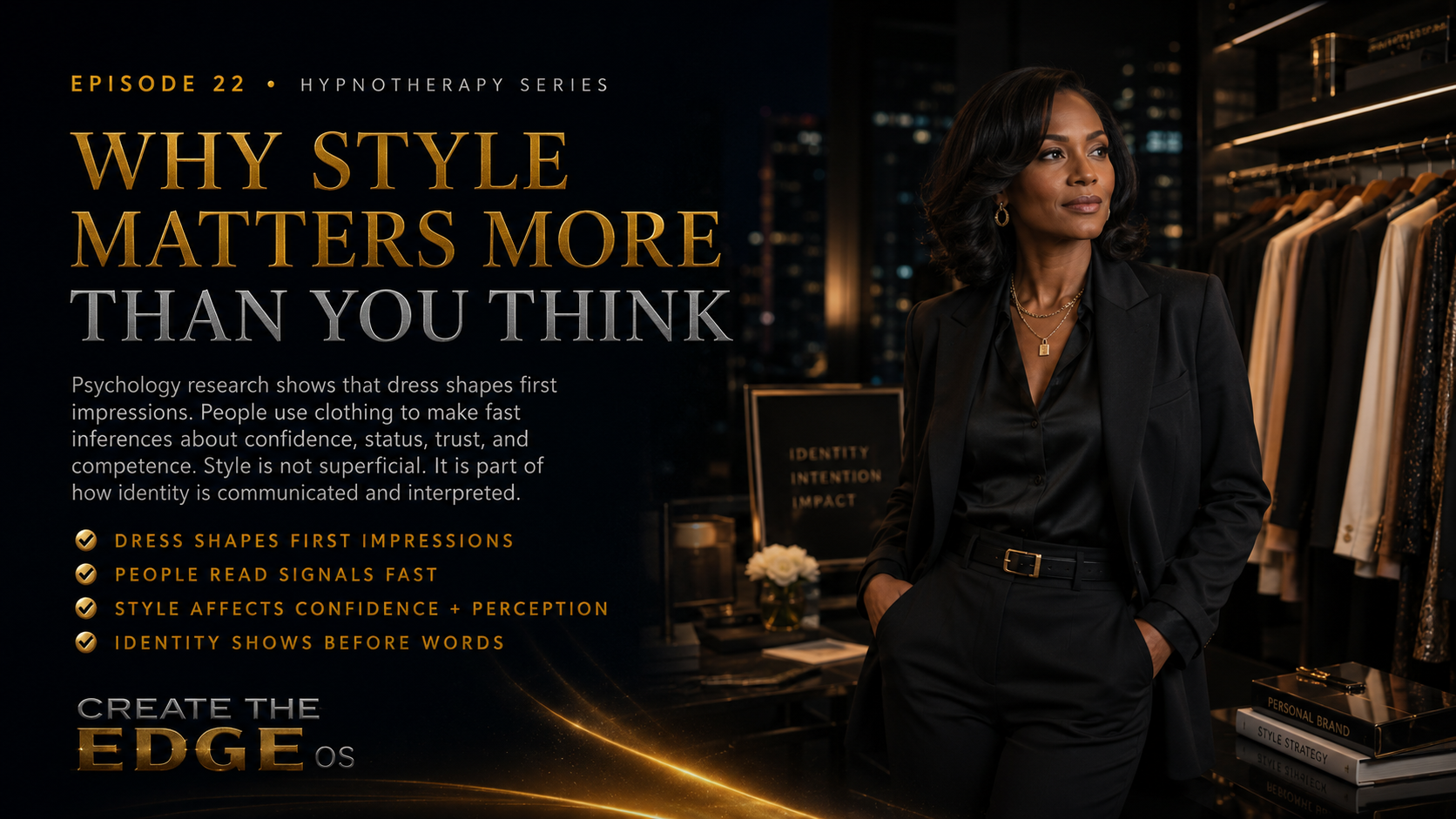
Episode 22 · Slide 1Episode 22 · Slide 1 · why style matters more than you think
Episode 22 · Slide 1
WHY STYLE MATTERS MORE THAN YOU THINK
Psychology research consistently shows that dress shapes first impressions. Before we have spoken, people use our clothing, posture, and grooming to make rapid inferences about our competence, confidence, status, and trustworthiness.
Style is not superficial. It is part of how identity is communicated and received. And more importantly, it is part of how we communicate that identity to ourselves. The way we dress sends a signal inward as much as outward.
This episode makes the case for taking style seriously as a dimension of wellbeing, not as vanity but as a form of deliberate self-expression that can support every other transformation we are working toward.
Reflect
1. Has there been a time when your clothing affected how seriously you took yourself or how seriously others took you?
2. What does the phrase personal style mean to you? Is it something you claim or something you have let go by default?
3. What message do you believe your current wardrobe is sending, to yourself and to the world?
4. How might becoming more intentional about style support your broader goals in health, confidence, and career?
5. What would it mean to claim your personal style as an act of self-respect?
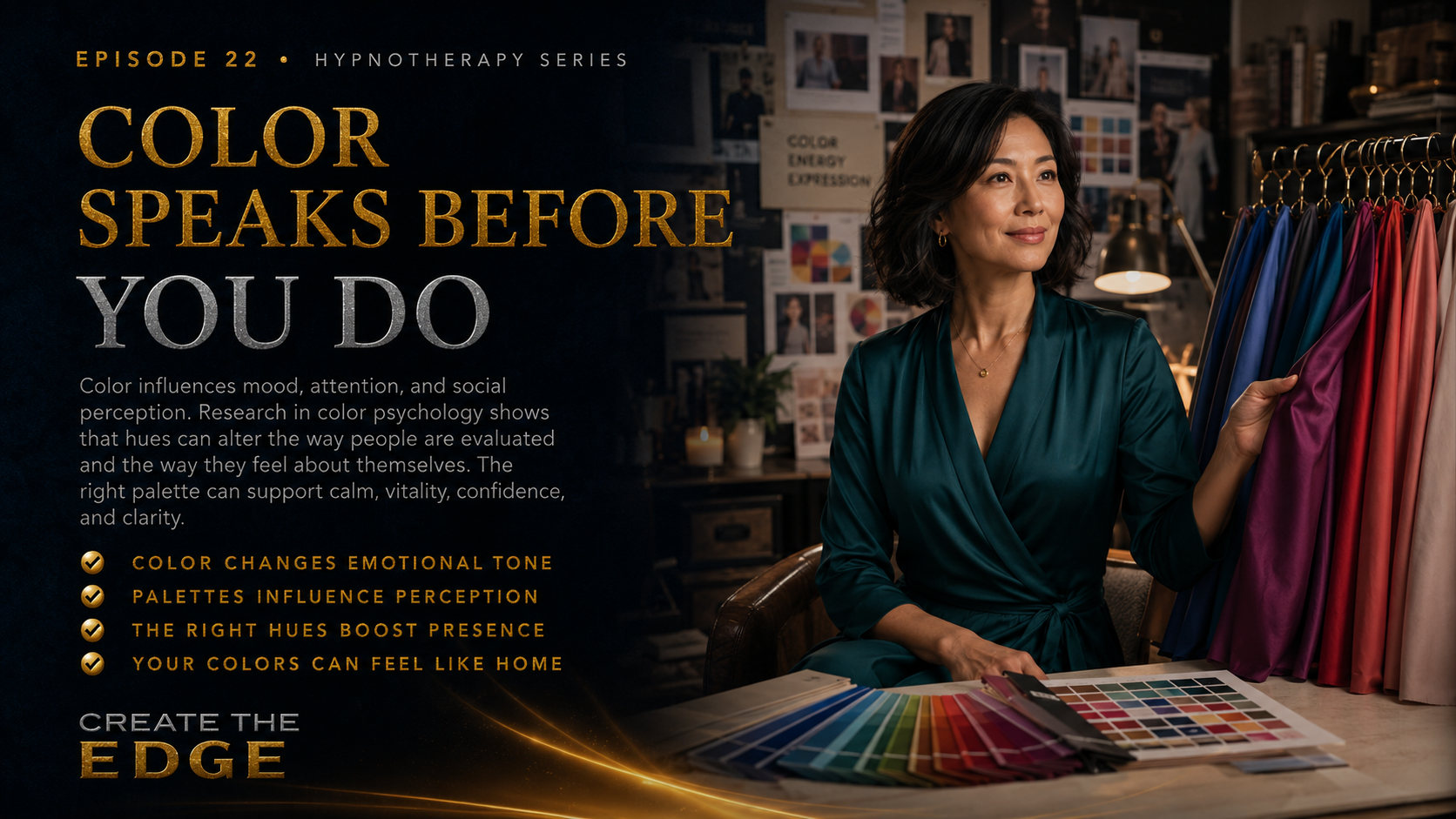
Episode 22 · Slide 2Episode 22 · Slide 2 · color speaks before you do
Episode 22 · Slide 2
COLOR SPEAKS BEFORE YOU DO
Color influences mood, attention, and social perception before anyone has said a word. Research in color psychology shows that specific hues can alter how we are evaluated by others and, just as importantly, how we feel about ourselves.
Warm colors often bring energy and visibility. Cool tones can communicate calm and authority. Neutrals signal stability and ease. The right palette does not mean the trendiest one. It means the one that genuinely supports your energy and communicates who you are.
When you find the colors that feel like home on your skin, getting dressed becomes simpler. The choices narrow in the best way, and you stop second-guessing.
Reflect
1. What colors do you consistently return to in your wardrobe? What do you think they communicate?
2. Is there a color you have always wanted to wear but felt you could not pull off? What stopped you?
3. How does wearing a color you love affect your mood and energy throughout the day?
4. What does your current primary color palette communicate about how you see yourself?
5. What one color shift in your wardrobe might most support how you want to feel and be perceived?
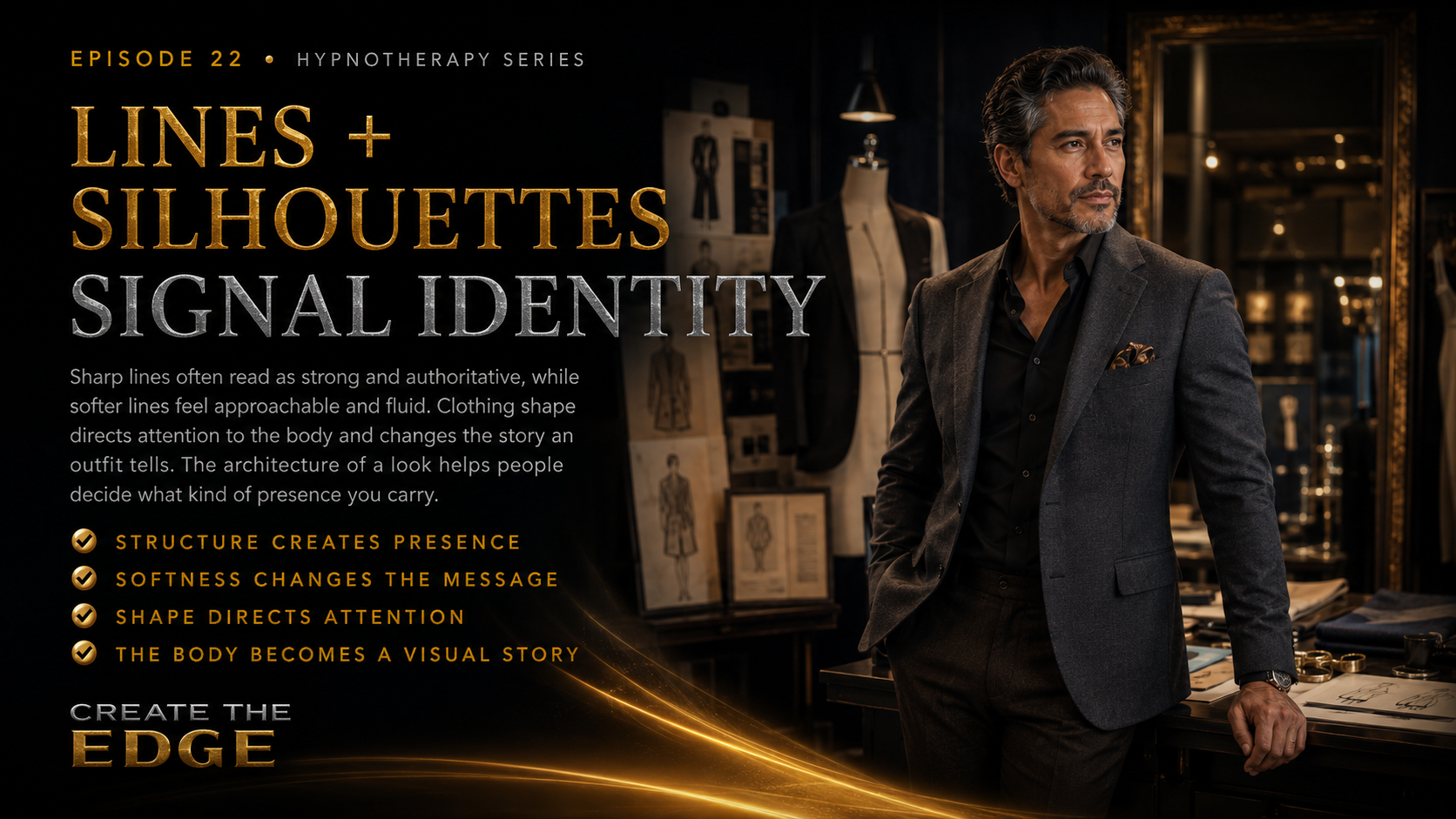
Episode 22 · Slide 3Episode 22 · Slide 3 · lines and silhouettes signal identity
Episode 22 · Slide 3
LINES AND SILHOUETTES SIGNAL IDENTITY
Sharp lines often read as strong and authoritative. Softer lines feel approachable and fluid. Clothing shape directs attention and changes the story an outfit tells about the person wearing it.
Understanding this is not about manipulation. It is about literacy. When you know that the architecture of a look creates meaning, you can choose shapes that communicate what you intend rather than leaving that message to chance.
The silhouette of your clothing is speaking even when you are not. It describes your authority, your energy, your comfort with taking up space. Knowing that, you can make those descriptions far more accurate.
Reflect
1. What shapes and silhouettes do you currently gravitate toward? What do they say about how you see yourself?
2. Are there shapes you avoid because of body image concerns? How might that be limiting your self-expression?
3. Think of an outfit that felt like armor: powerful and protective. What made it feel that way?
4. How might choosing more deliberate shapes change how you carry yourself in professional or social settings?
5. What is the body language you want your clothing to amplify? What silhouette supports that?
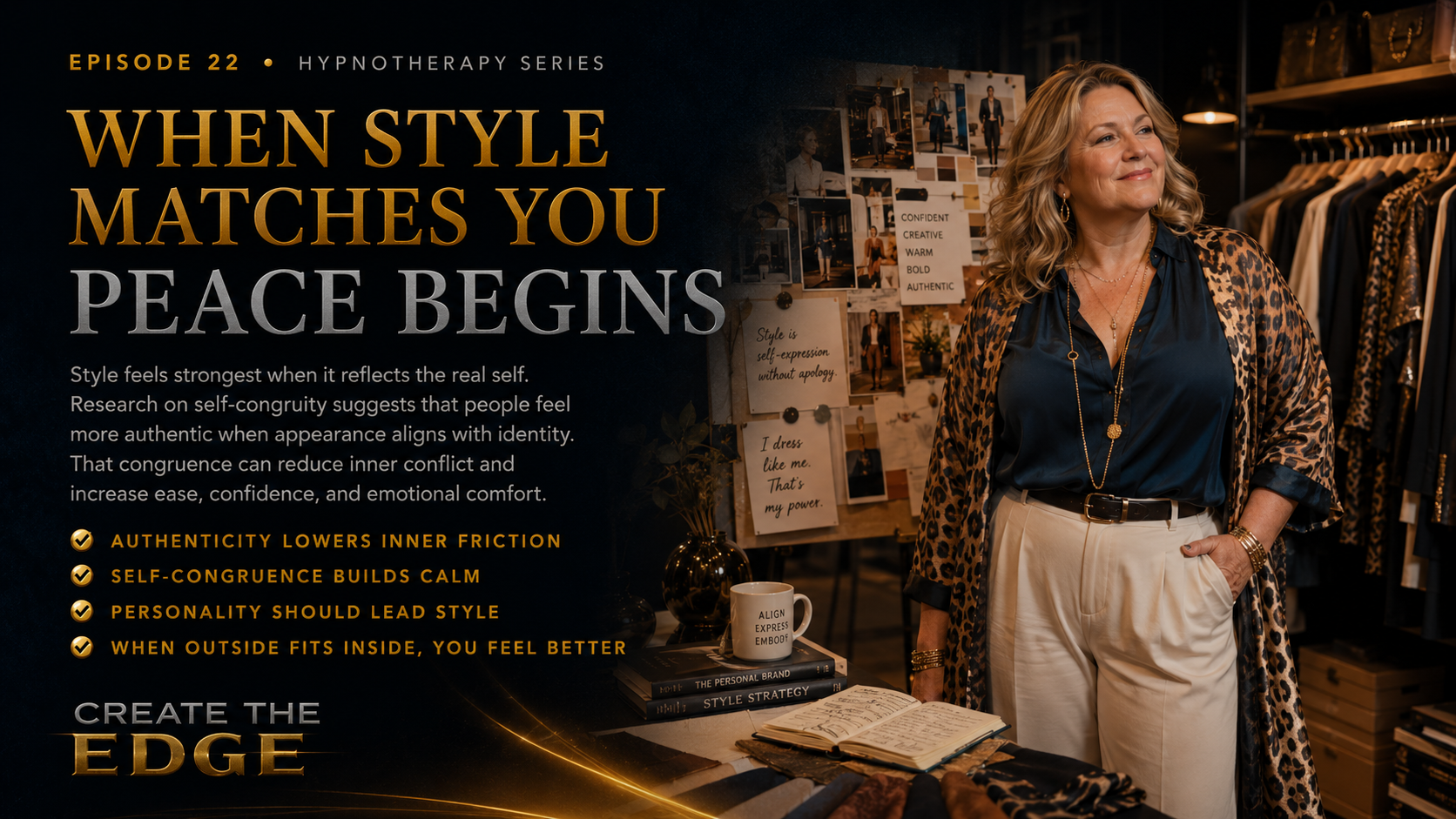
Episode 22 · Slide 4Episode 22 · Slide 4 · when style matches you, peace begins
Episode 22 · Slide 4
WHEN STYLE MATCHES YOU, PEACE BEGINS
Research on self-congruity shows that people feel most authentic when their outer appearance aligns with their inner identity. When who you are on the inside matches what you project on the outside, a quiet peace settles in.
That congruence reduces inner friction. The energy that was going into managing the gap between inside and outside can be redirected toward the work, the relationships, the life you are actually building.
When you stop fighting your clothing, when every morning feels like a small act of self-recognition rather than a negotiation, something genuinely shifts in how you move through the day.
Reflect
1. Where do you feel the greatest gap between how you present yourself and who you actually are?
2. What would it feel like to have your outer appearance be a genuine reflection of your inner self?
3. Is there an area of your life where you feel most congruent, most yourself? What does that feel like?
4. What would closing the style-identity gap require from you in practical terms?
5. If your style were completely aligned with your identity, what three words would describe it?
Episode 22 · Slide 5Episode 22 · Slide 5 · clothes can change how you think
Episode 22 · Slide 5
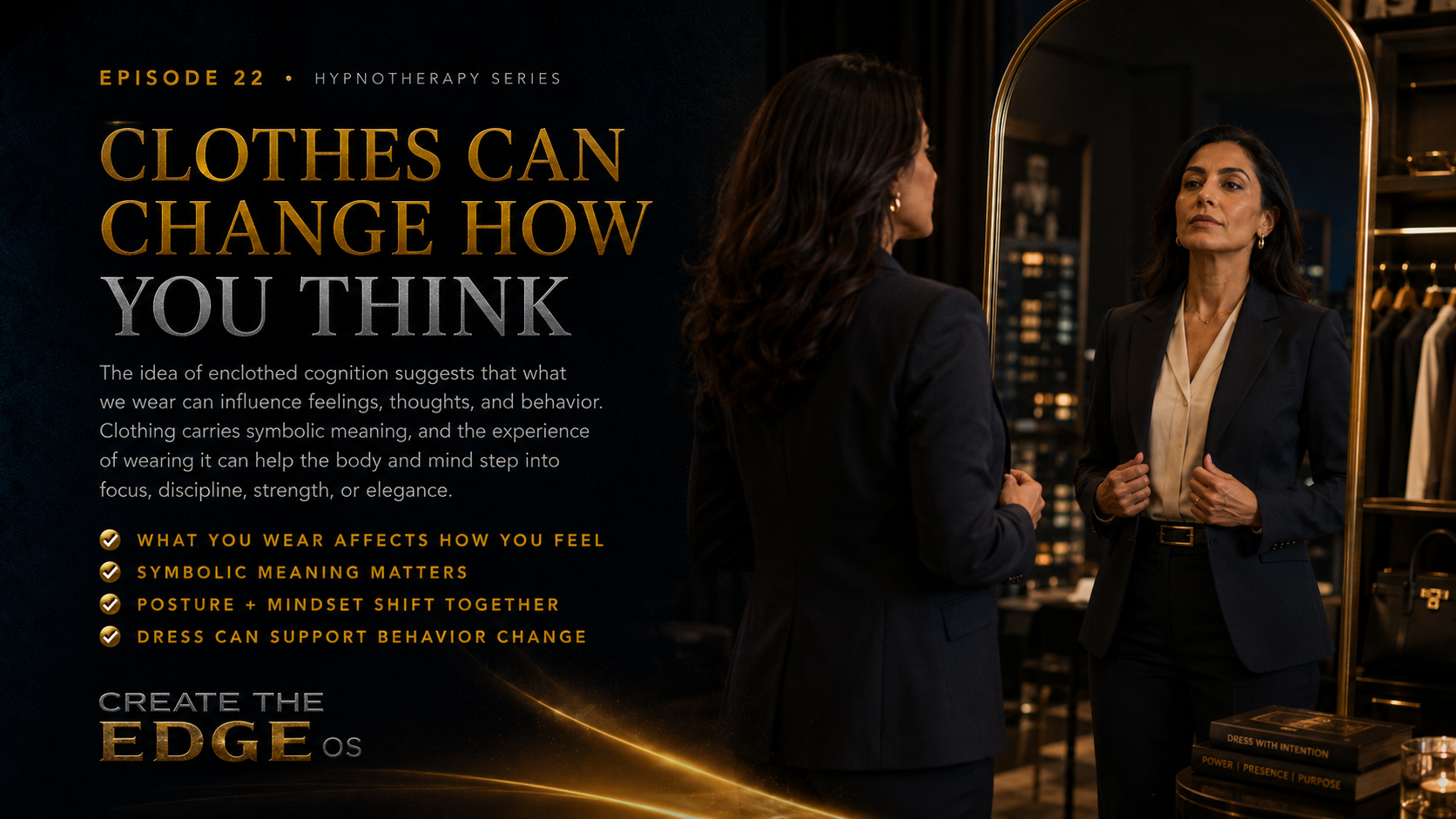
CLOTHES CAN CHANGE HOW YOU THINK
The concept of enclothed cognition suggests that what we wear can influence our feelings, thoughts, and even behavior. Clothing carries symbolic meaning, and the experience of wearing it can help the body and mind step into different modes of being.
Wearing something you associate with professionalism can sharpen focus. Wearing something you associate with strength can increase your willingness to take risks. Wearing something soft and comfortable can invite more open, creative thinking.
Your wardrobe is not just storage for fabric. It is a collection of states you can choose to access. Knowing that makes every choice more powerful.
Reflect
1. Have you ever noticed your mindset change based on what you were wearing that day?
2. What outfit do you associate with your most capable, focused professional self?
3. What do you wear when you want to feel most creative, or most at ease?
4. How might choosing your clothing more deliberately based on the state you want to access change your productivity?
5. What symbolic meaning do you most want your most-worn clothing to carry?
Episode 22 · Slide 6Episode 22 · Slide 6 · hypnotherapy helps you see the future self
Episode 22 · Slide 6
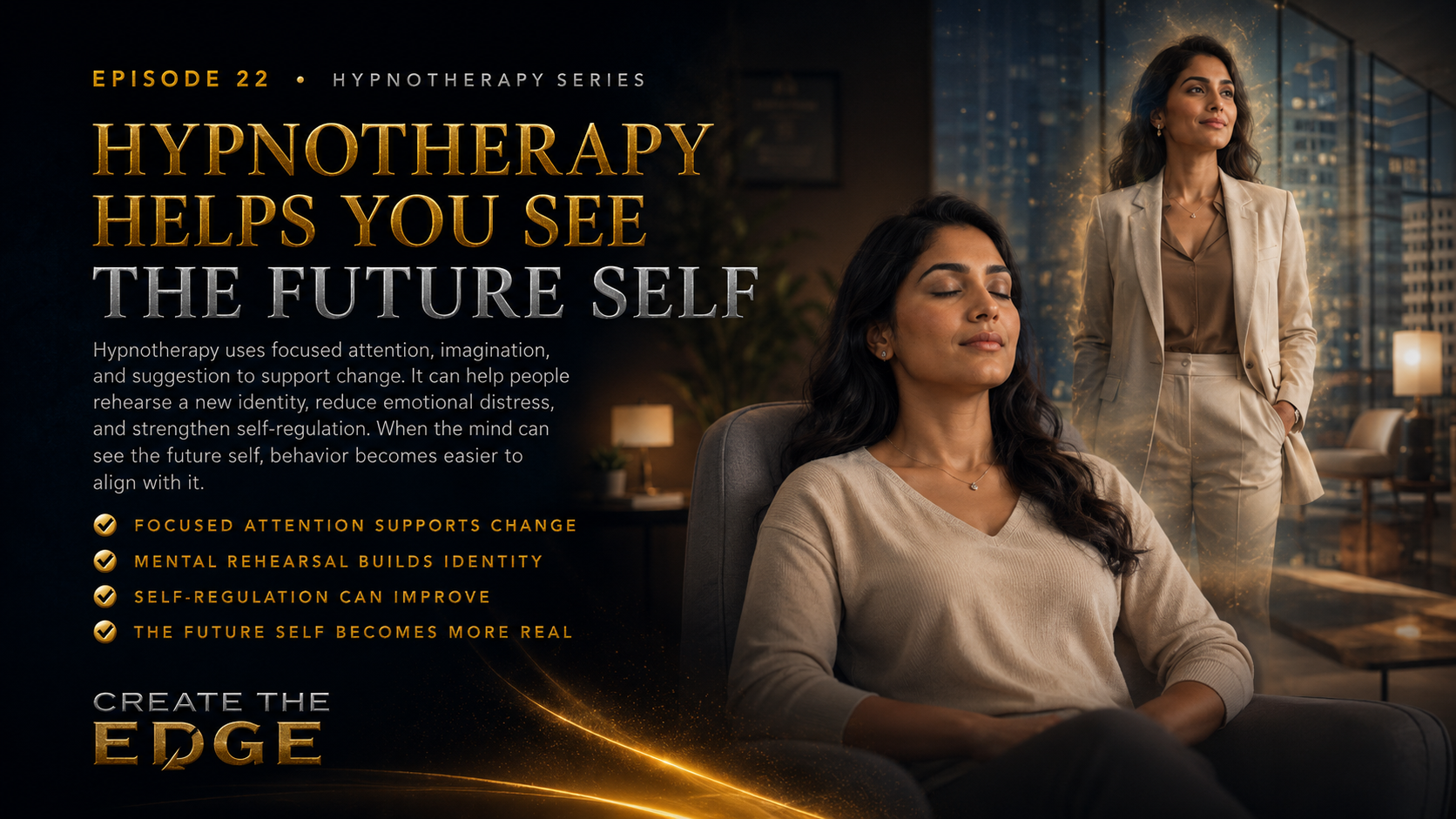
HYPNOTHERAPY HELPS YOU SEE THE FUTURE SELF
Hypnotherapy uses focused attention and mental rehearsal to help people step into a future identity that has not yet fully arrived in the physical world. When the mind can vividly imagine and emotionally feel the future self, behavior becomes easier to align with it.
This is not fantasy. It is one of the most evidence-supported techniques in behavioral change. Athletes use it. Performers use it. And anyone working to transform their health, confidence, or career can benefit from it.
When you close your eyes and see yourself clearly, healthy, confident, stylishly dressed, moving through the world with ease, you are not escaping reality. You are rehearsing it.
Reflect
1. Can you picture your future self clearly? What does she look like? How does she dress? How does she move?
2. What emotions come up when you imagine that future version of yourself?
3. Is there anything about that future image that feels threatening or uncomfortable? What does that tell you?
4. How might regularly visualizing your future self change your daily choices?
5. What one quality of your future self can you begin embodying right now, today?
Episode 22 · Slide 7Episode 22 · Slide 7 · healing old stories changes the outer story
Episode 22 · Slide 7
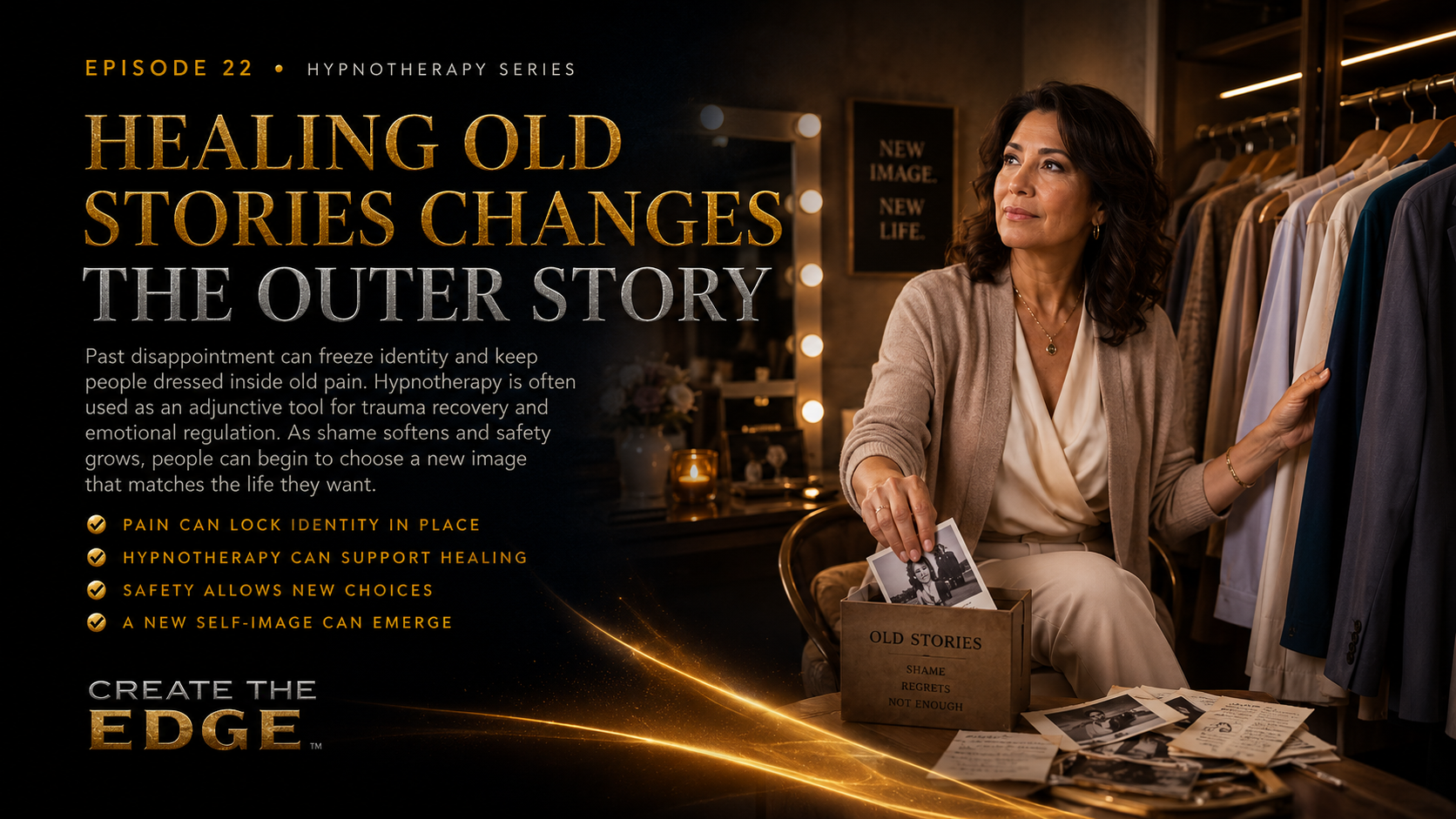
HEALING OLD STORIES CHANGES THE OUTER STORY
Past disappointment, body shame, and old messages can freeze identity and keep people dressed inside old pain. When you are hiding, when you have given up, when you believe the effort is not worth it, the clothing reflects that.
Hypnotherapy is often used as a complementary tool for emotional processing and self-regulation. As shame softens and safety grows, people begin to reach for different things: colors they had abandoned, silhouettes they had dismissed, a care for their appearance that they had decided they did not deserve.
A new self-image is not purchased. It is built, slowly and honestly, through the inner work that eventually makes the outer choices feel different.
Reflect
1. What old story about your body or your appearance are you most ready to release?
2. Is there a version of yourself that gave up on looking good, feeling good, or being seen? When did that happen?
3. What would it mean to begin healing that older story through the way you care for your appearance now?
4. What clothing or style choices have you abandoned because you decided you did not deserve them?
5. What small external change, something you could do this week, would feel like a declaration that you are beginning again?
Episode 22 · Slide 8Episode 22 · Slide 8 · when weight loss is the goal, identity matters
Episode 22 · Slide 8
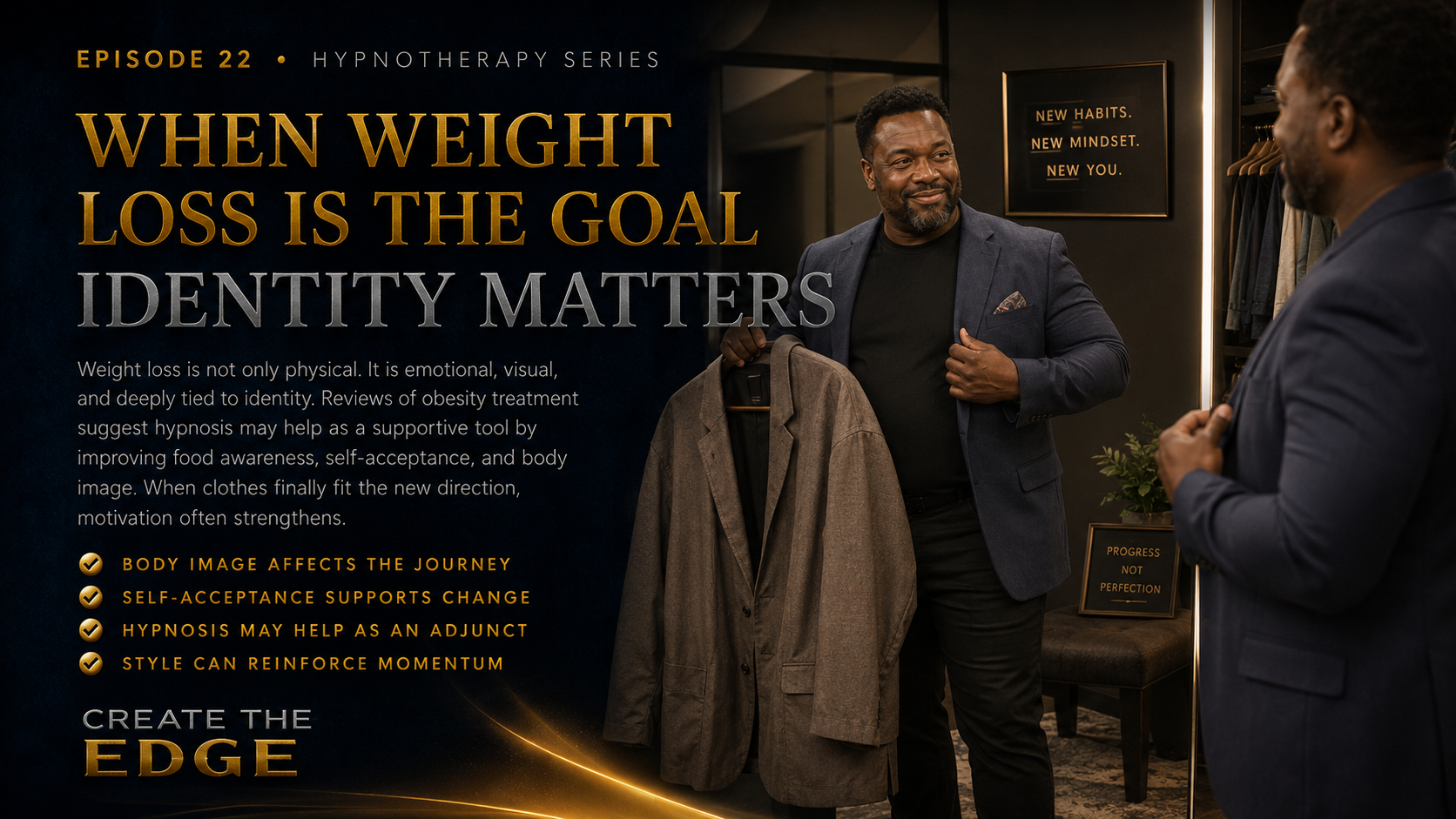
WHEN WEIGHT LOSS IS THE GOAL, IDENTITY MATTERS
Weight loss is not only physical. It is emotional, visual, and deeply tied to identity. Hypnotherapy supports this multidimensional process by helping with food awareness, self-acceptance, and the body image shifts that often accompany physical change.
When clothes finally fit the new direction, when the mirror reflects progress and the wardrobe honors it, motivation frequently deepens. The outer evidence of inner work becomes a reinforcing signal.
Style, in this context, is not a reward saved for after transformation. It is a participant in it. Dressing with care throughout the process keeps the identity shift moving forward, even on the days when progress feels slow.
Reflect
1. How does your body image affect your relationship to food and movement right now?
2. What role has self-acceptance played in your health journey, or what role could it play?
3. Have you ever experienced a moment when looking in the mirror and feeling good about what you saw reinforced your commitment to continue?
4. How might treating style as part of your wellness practice, not a reward for it, change your approach?
5. What one style choice could you make this week that would honor where you are in your journey right now?
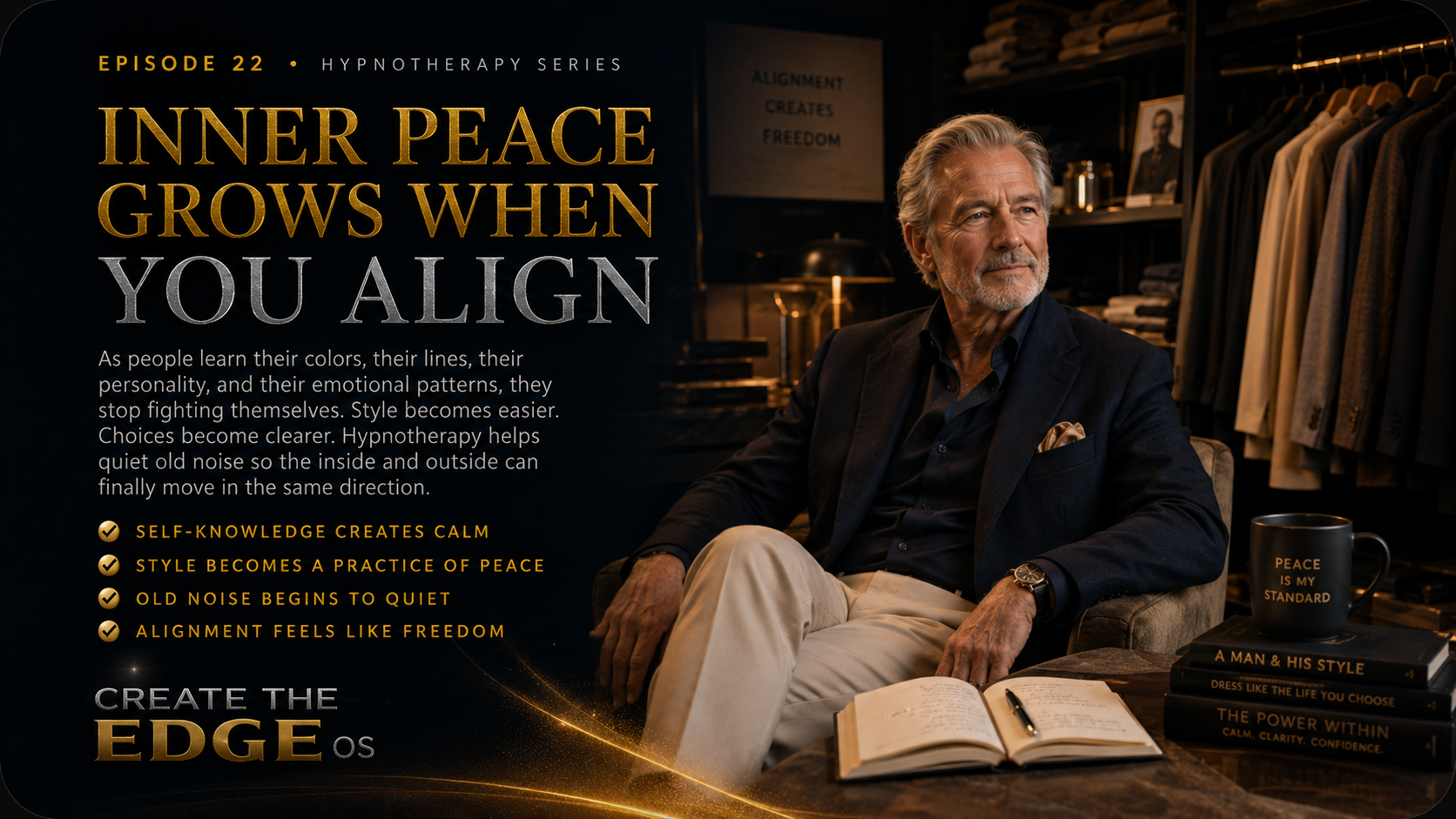
Episode 22 · Slide 9Episode 22 · Slide 9 · inner peace grows when you align
Episode 22 · Slide 9
INNER PEACE GROWS WHEN YOU ALIGN
As people learn their colors, their lines, their personality, and their emotional patterns, they stop fighting themselves. Style becomes easier. Choices become clearer. The daily act of getting dressed shifts from something that costs energy to something that restores it.
Hypnotherapy helps quiet the old noise: the inner critic, the inherited beliefs, the fear of being seen, so that the inside and outside can finally move in the same direction.
When alignment happens, even partially, even imperfectly, it produces a quiet that is difficult to describe and unmistakable to experience. It feels like freedom.
Reflect
1. Where in your daily life do you feel the most aligned, the most fully yourself?
2. What would alignment between your inner world and your outer presentation feel and look like for you?
3. What is the loudest voice that disrupts your sense of inner peace around your appearance?
4. What one practice, inner or outer, could you begin this week to move toward greater alignment?
5. What does freedom from self-judgment around your appearance look like? Can you picture it?
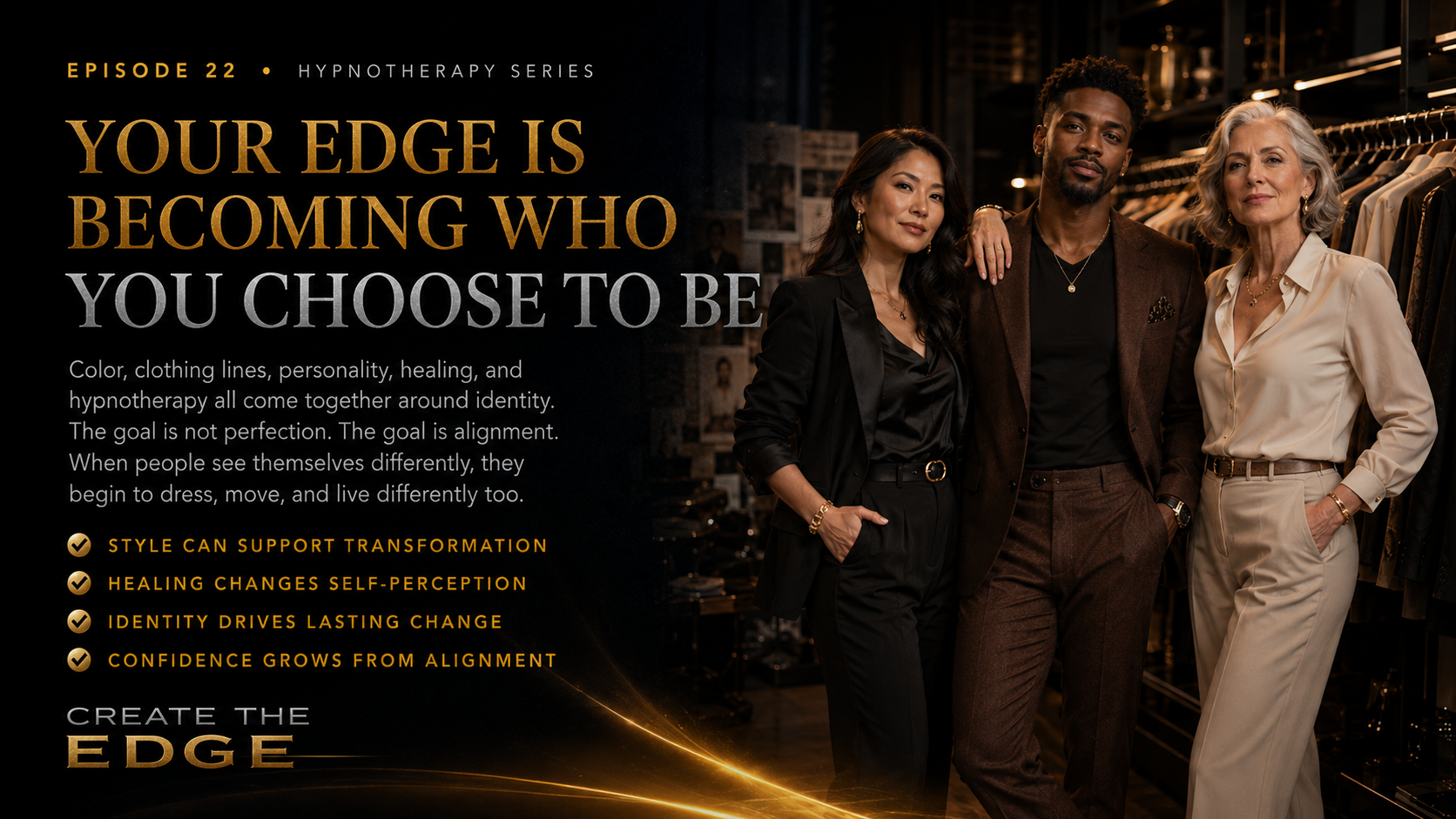
Episode 22 · Slide 10Episode 22 · Slide 10 · your edge is becoming who you choose to be
Episode 22 · Slide 10
YOUR EDGE IS BECOMING WHO YOU CHOOSE TO BE
Color, clothing lines, personality, healing, and hypnotherapy all converge around the same point: identity. Who do you choose to be? And how much of your daily life, including the way you dress, the way you move, and the way you see yourself, reflects that choice?
The goal is not perfection. The goal is alignment. When people begin to see themselves differently, they dress differently, move differently, and live differently. The outer story follows the inner one.
You are building that inner story right now. Keep going.
Reflect
1. Who do you choose to be? Write the most honest, ambitious, loving answer you can.
2. What would your life look and feel like six months from now if you fully committed to that choice?
3. What does your edge, that quality that is uniquely, powerfully yours, actually look and feel like?
4. What is one commitment you are making to yourself as you complete this episode?
5. What do you want to remember from this series of episodes when the journey feels hard?